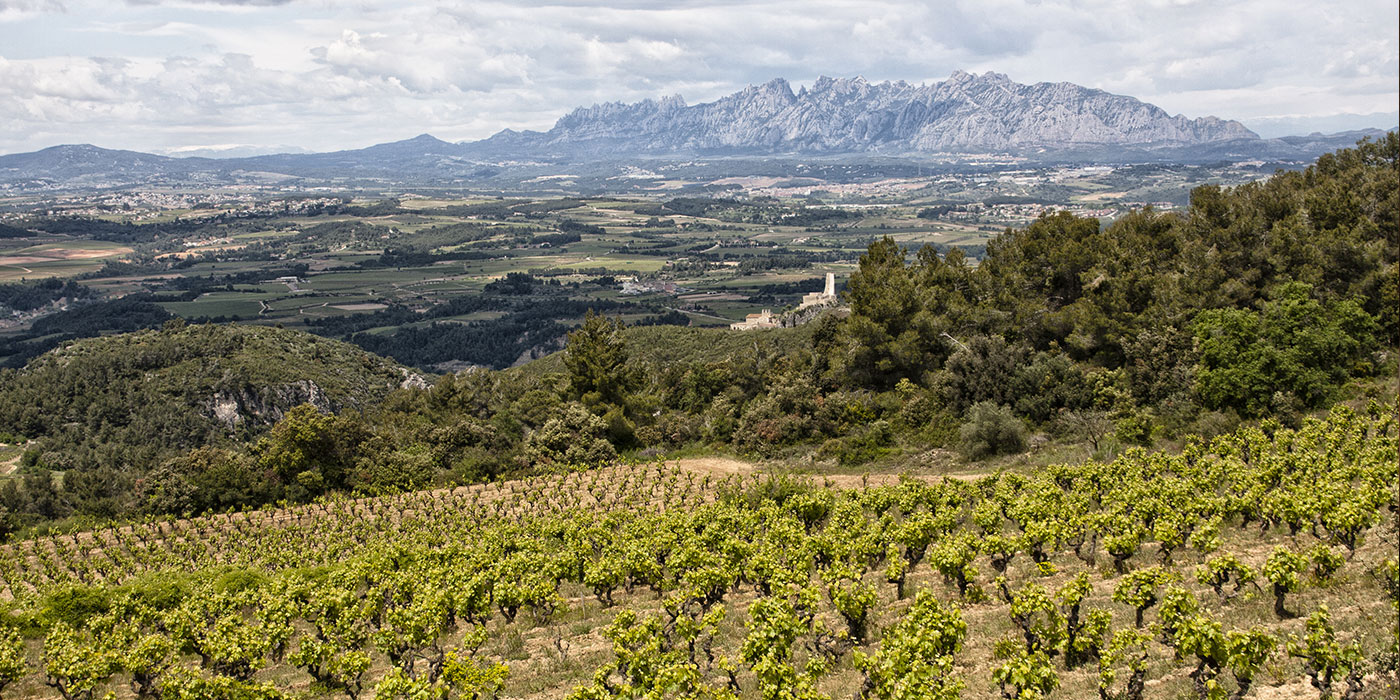
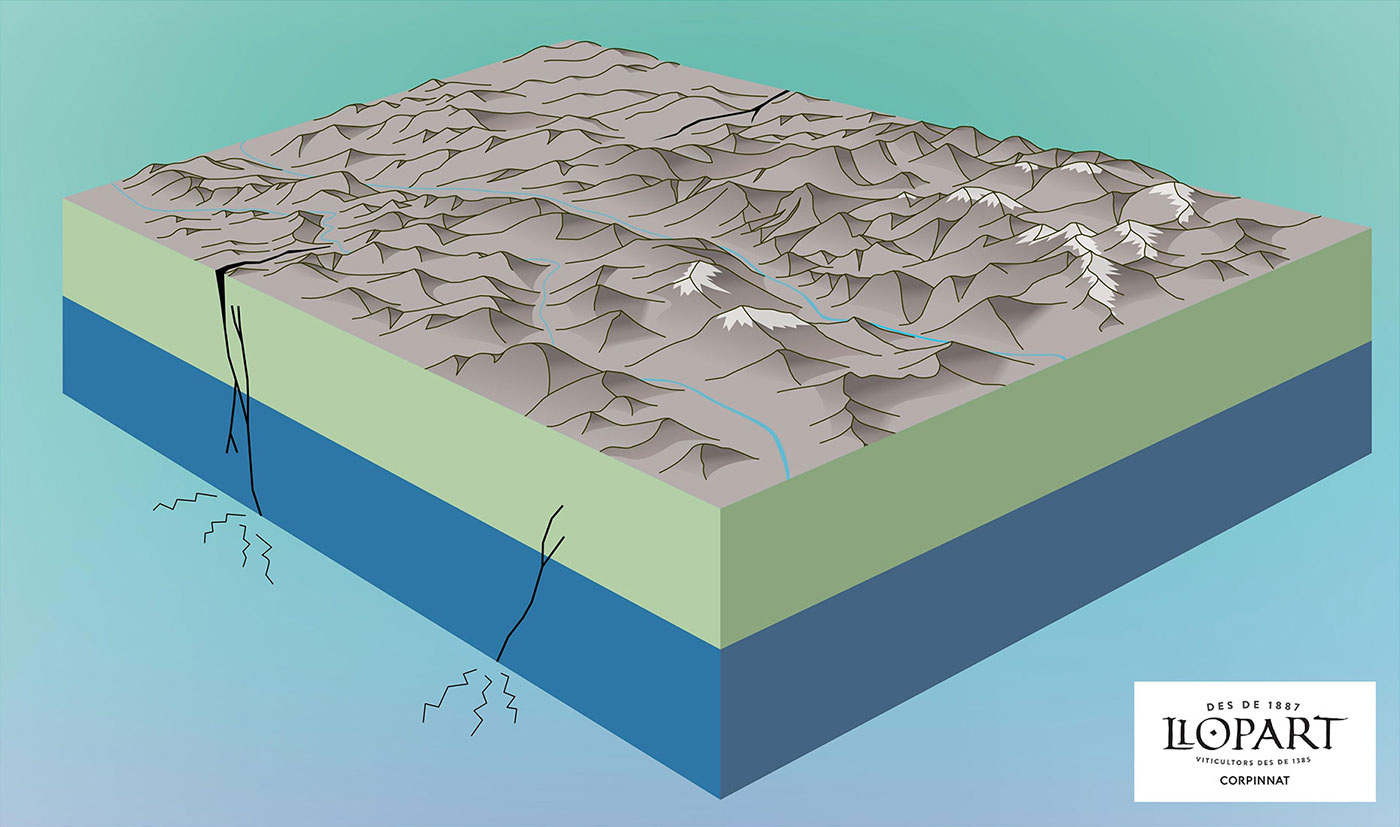
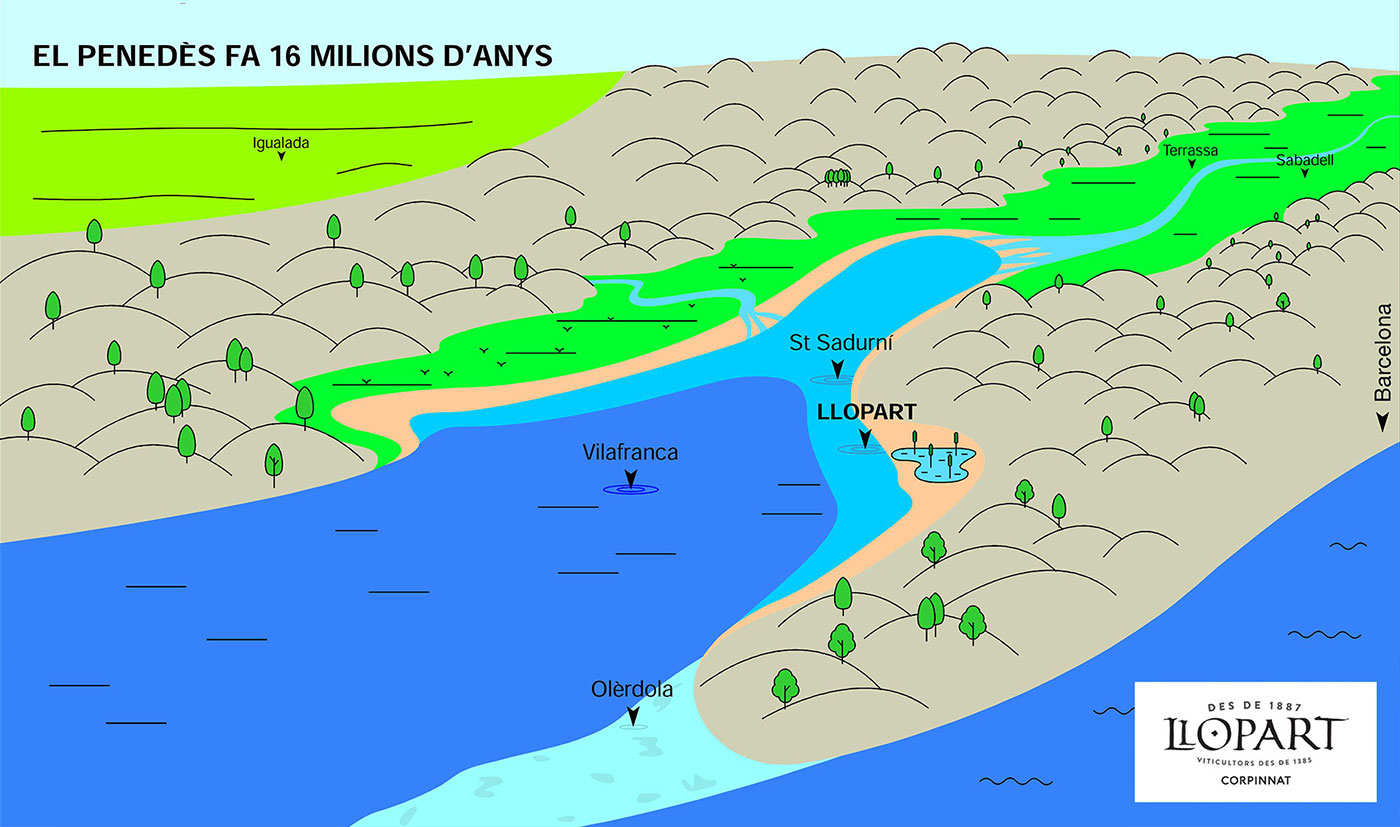
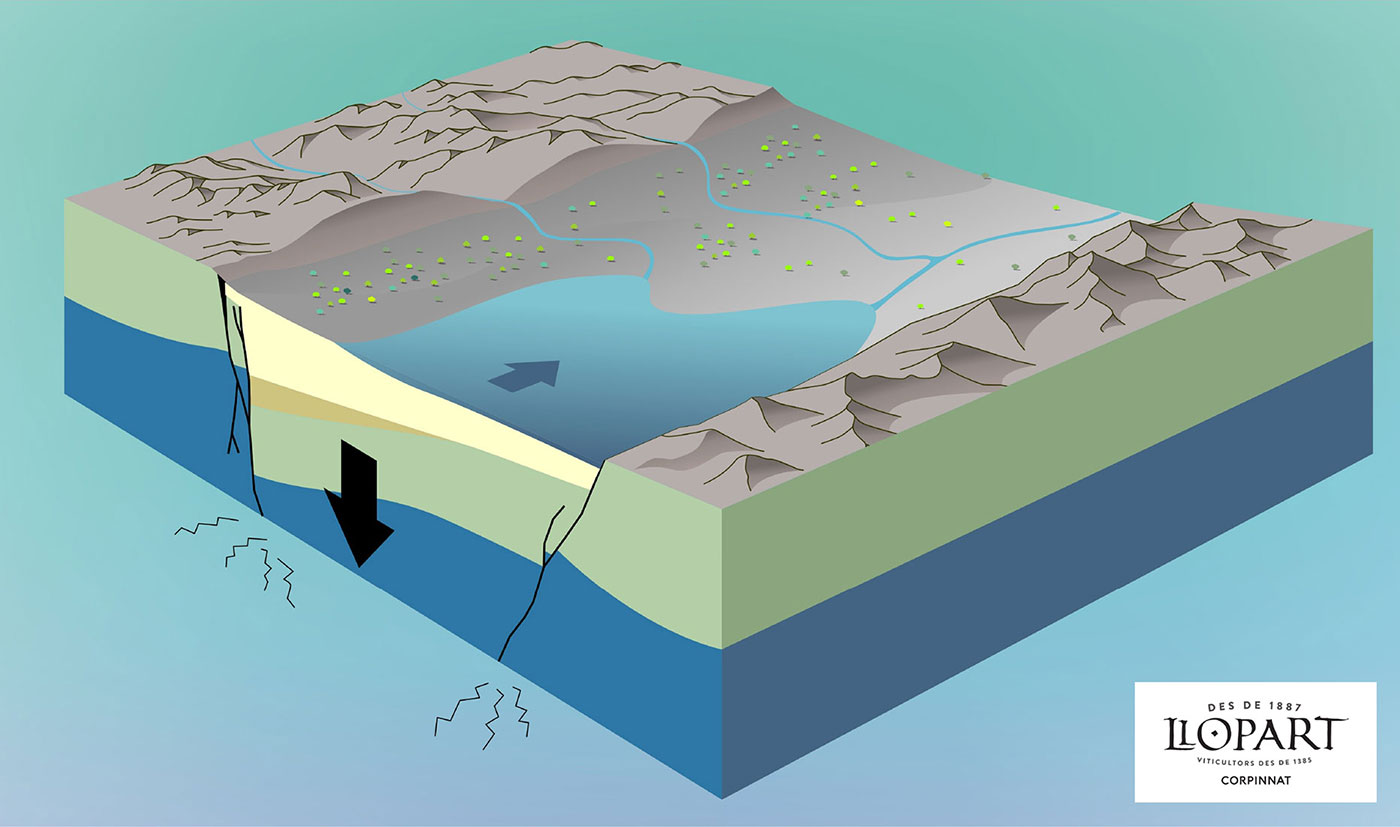
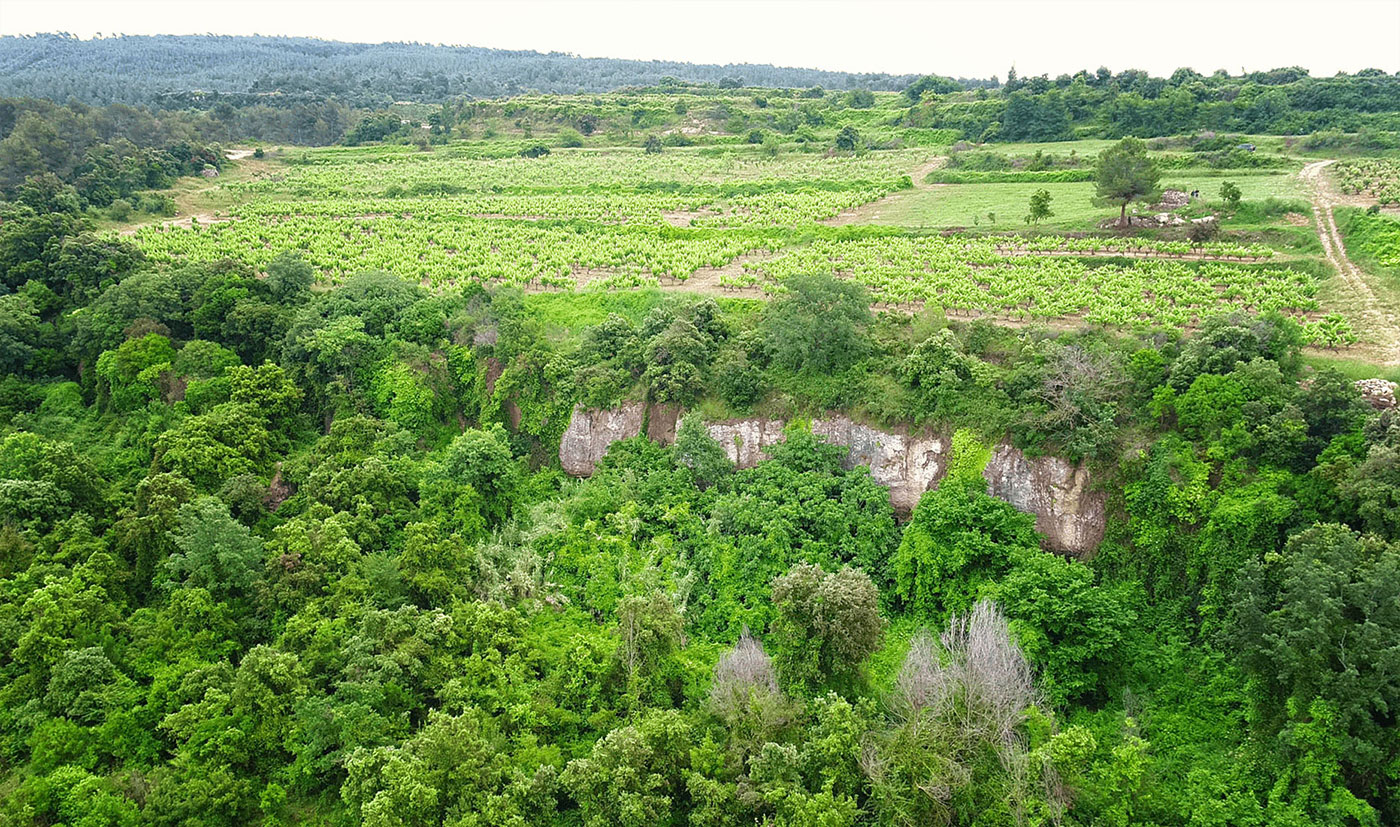
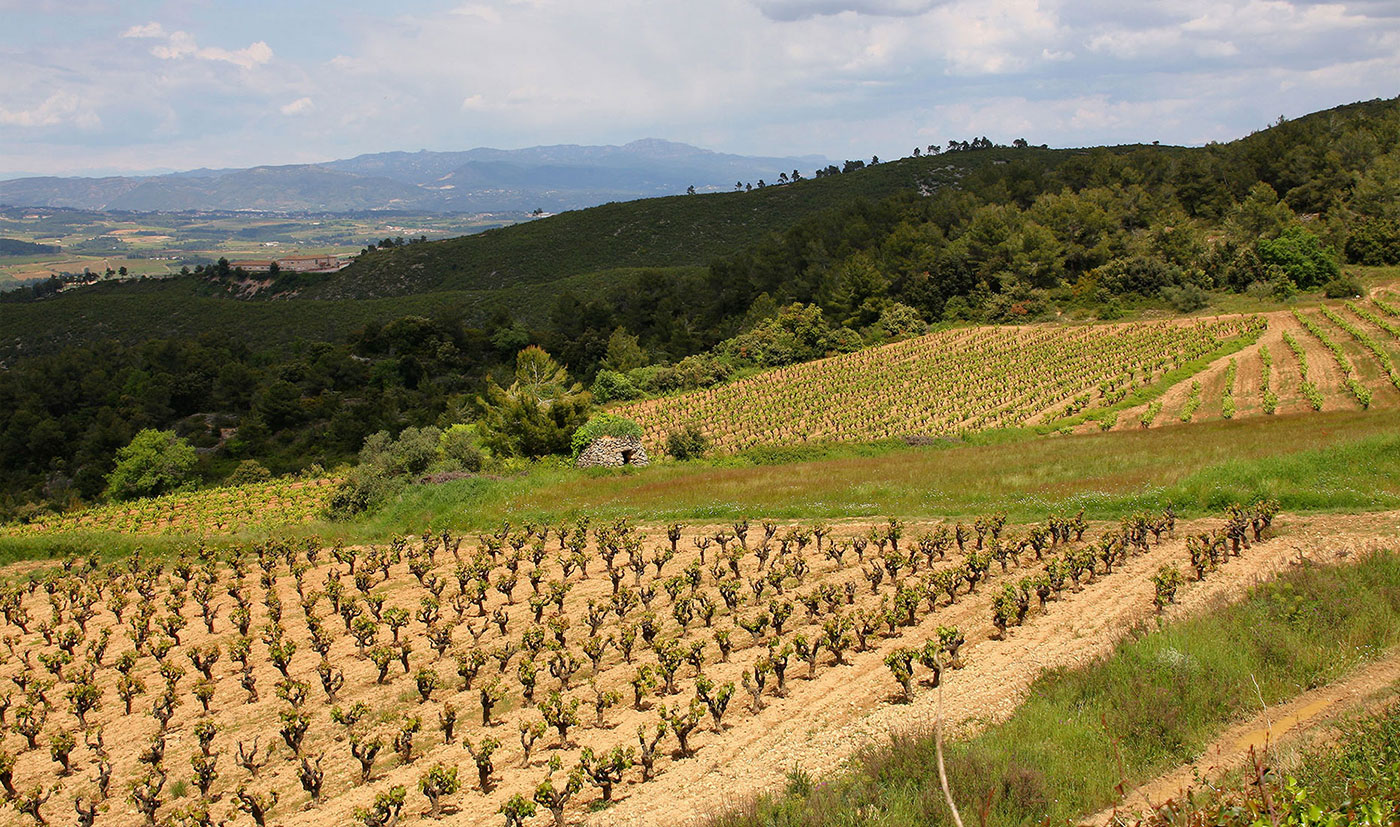
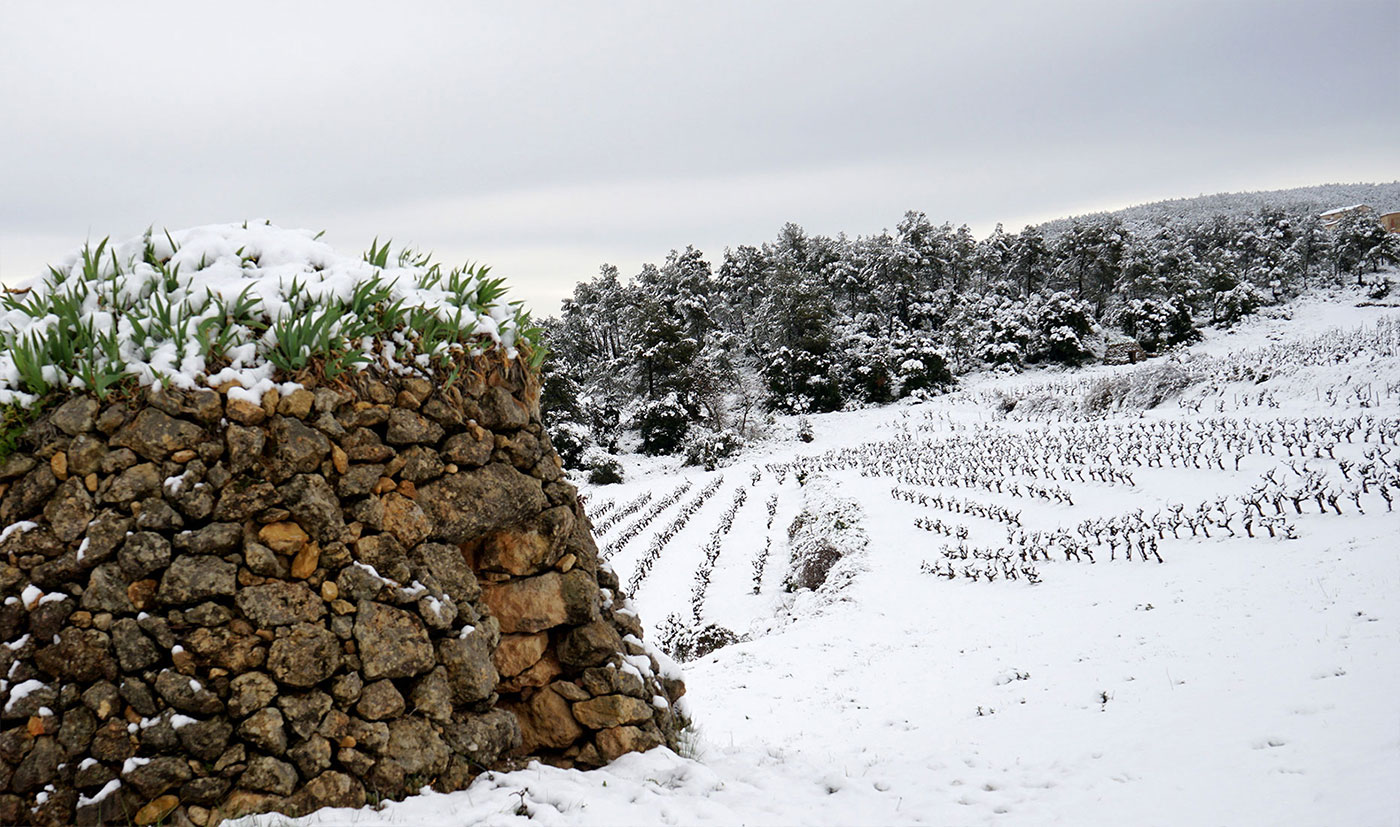
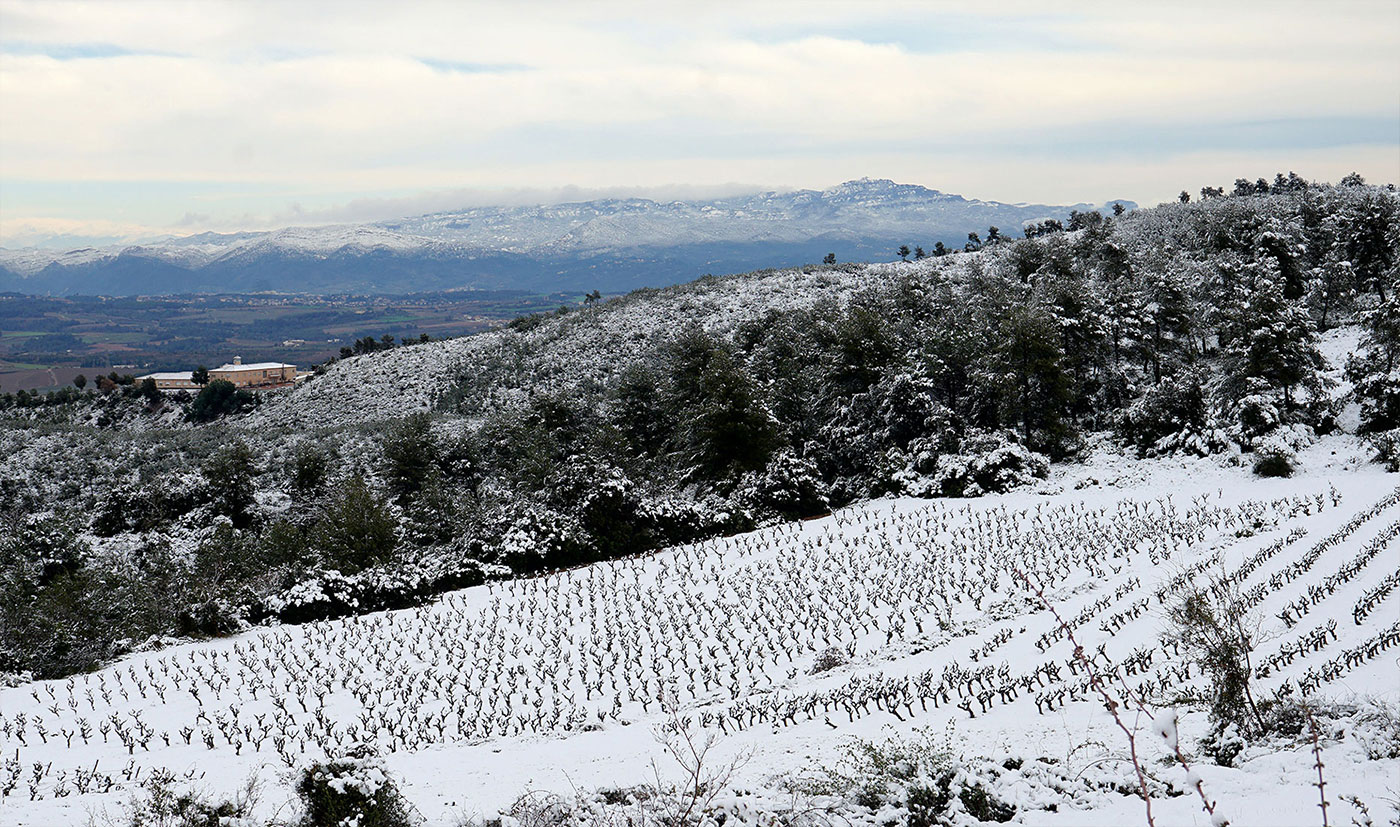
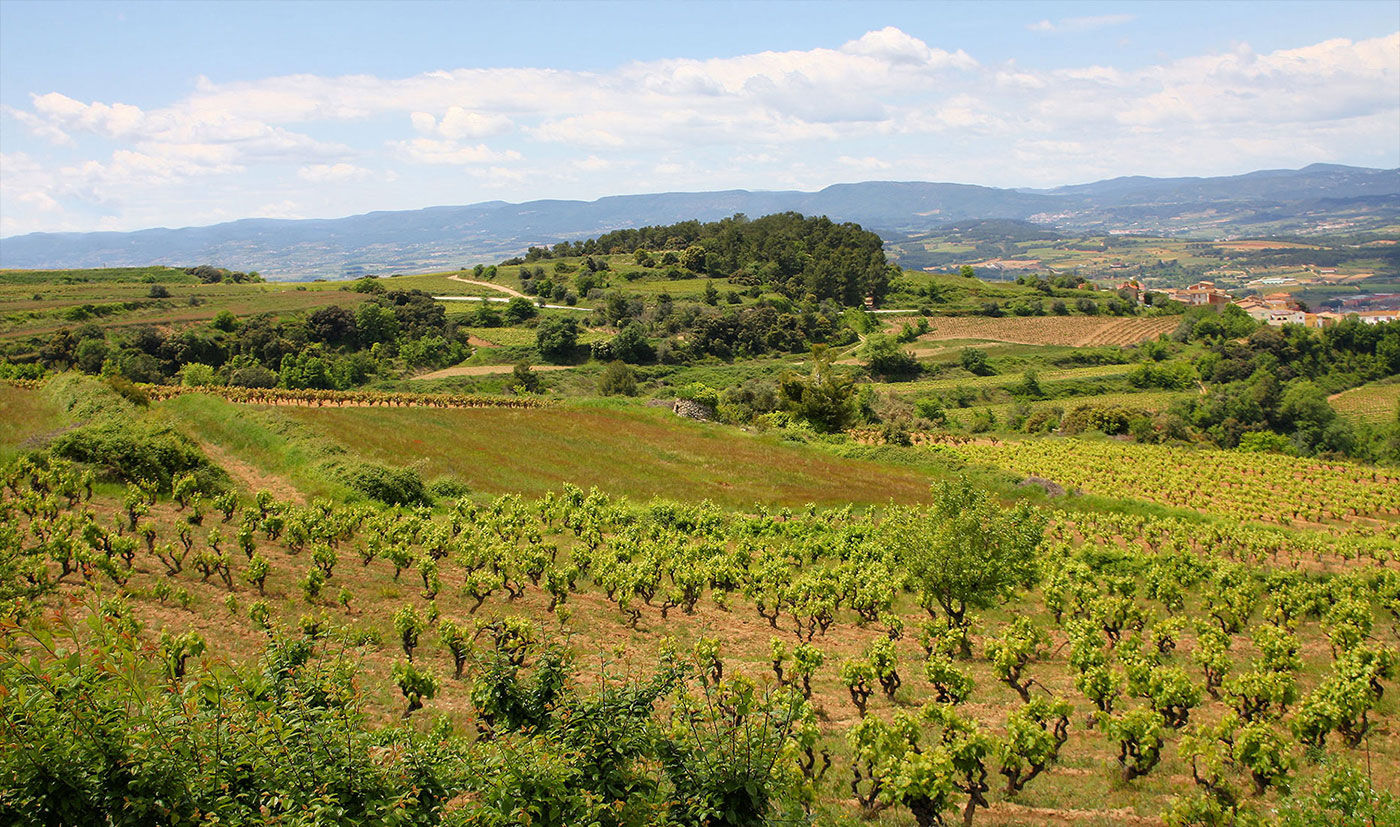
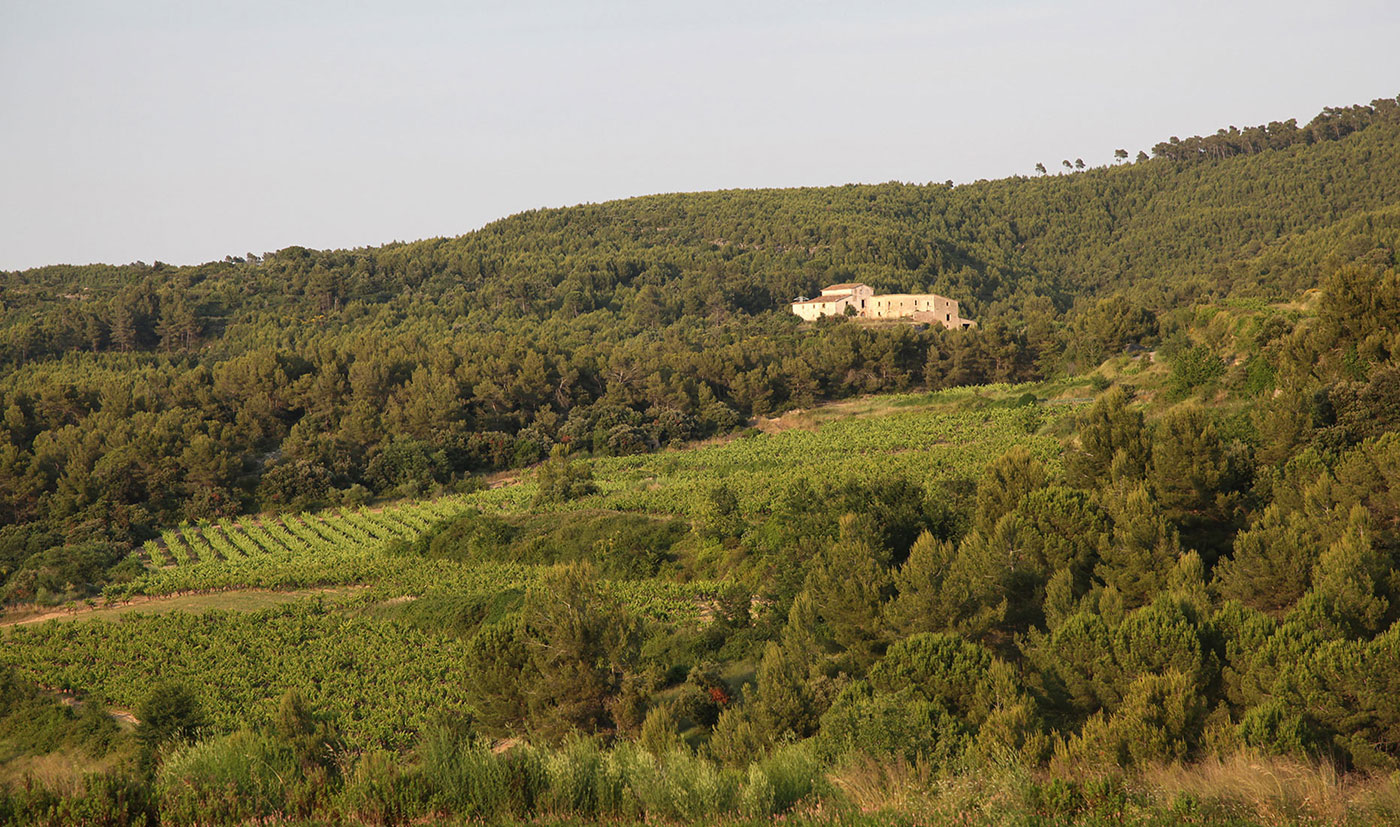
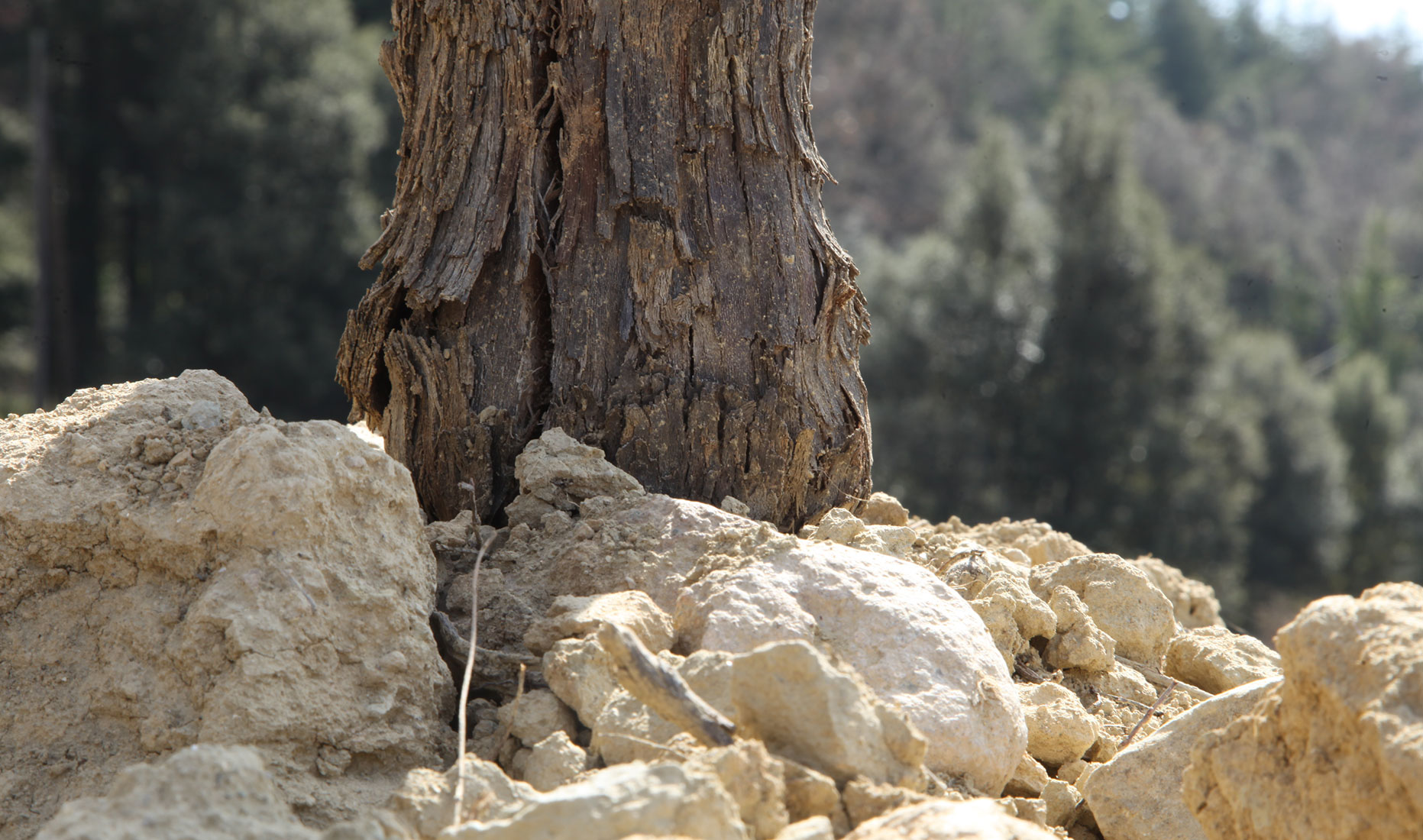
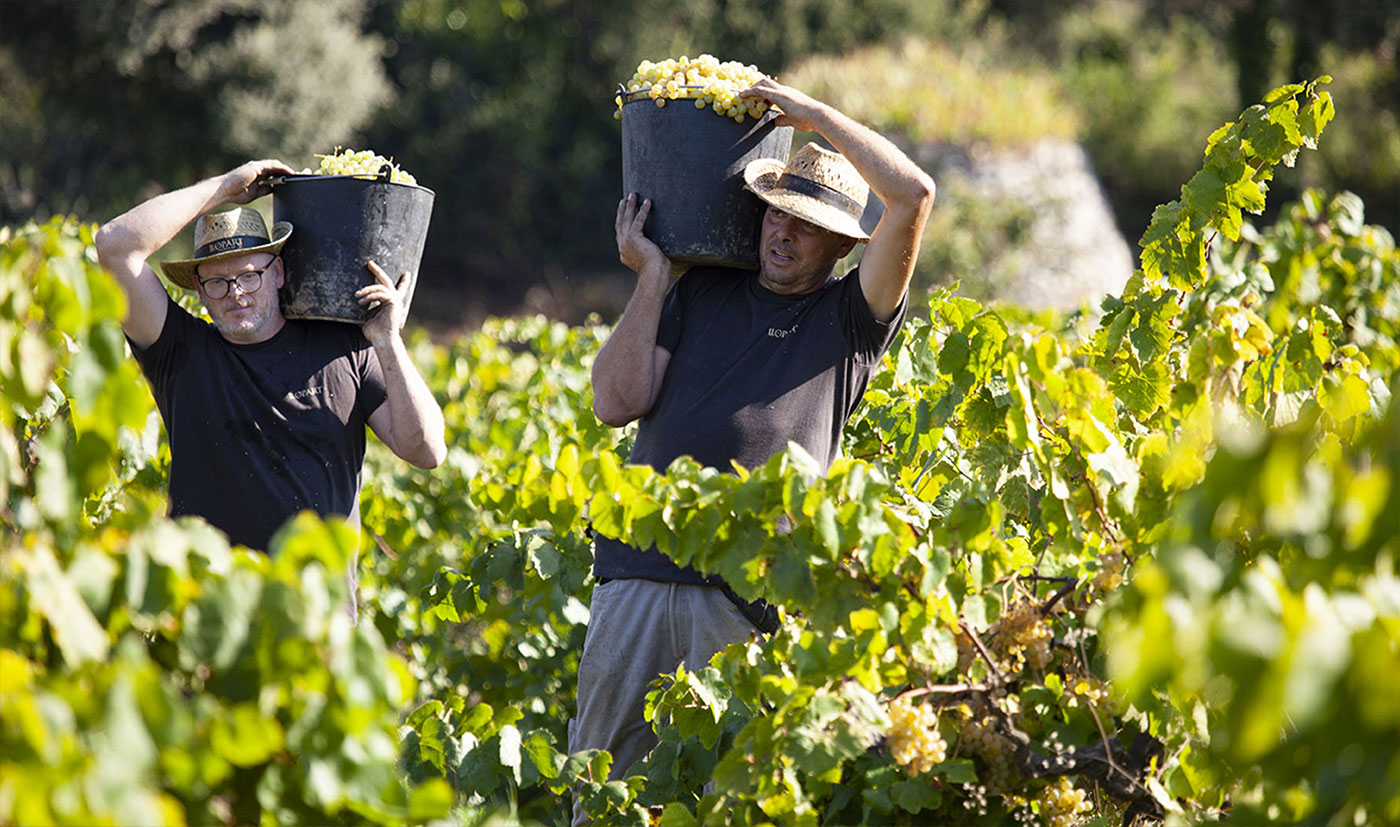
The unique vineyards of Les Flandes are located in the Heretat can Llopart de Subirats, within the Clos dels Costers, in the Penedès Depression and in the extreme west of the Ordal mountains. It is at an altitude of 380 meters above sea level. Geologically it is part of the foothills attached to the Garraf Massif, with a subsoil characterized by the outcrop of sedimentary materials from the Miocene (between 16 and 20 million years old) and carbonate rocks from the Lower Cretaceous (between 100 and 145 million years old). Due to its past as a primitive sea arm that suffered several advances and retractions, we find strata with remains of coastal marine fossils, coral reefs and sedimentation strata of ancient ravines, rivers, deltas and small lagoons.
The environment is an enclave surrounded by an immense green lung of wild scrub and Mediterranean forests of pines and oaks. It is declared and protected as an Area of Natural Interest (PEIN) . It forms a rich mosaic of flora and fauna, with a wide variety of aromatic and medicinal plants and where it is worth highlighting the presence of species of vertebrates typically found in forests (badger, squirrel, wild boar, hare, shrew, bat, robin, woodpecker, bonito, grebe, lizards, …) and a high prevalence of invertebrate communities.
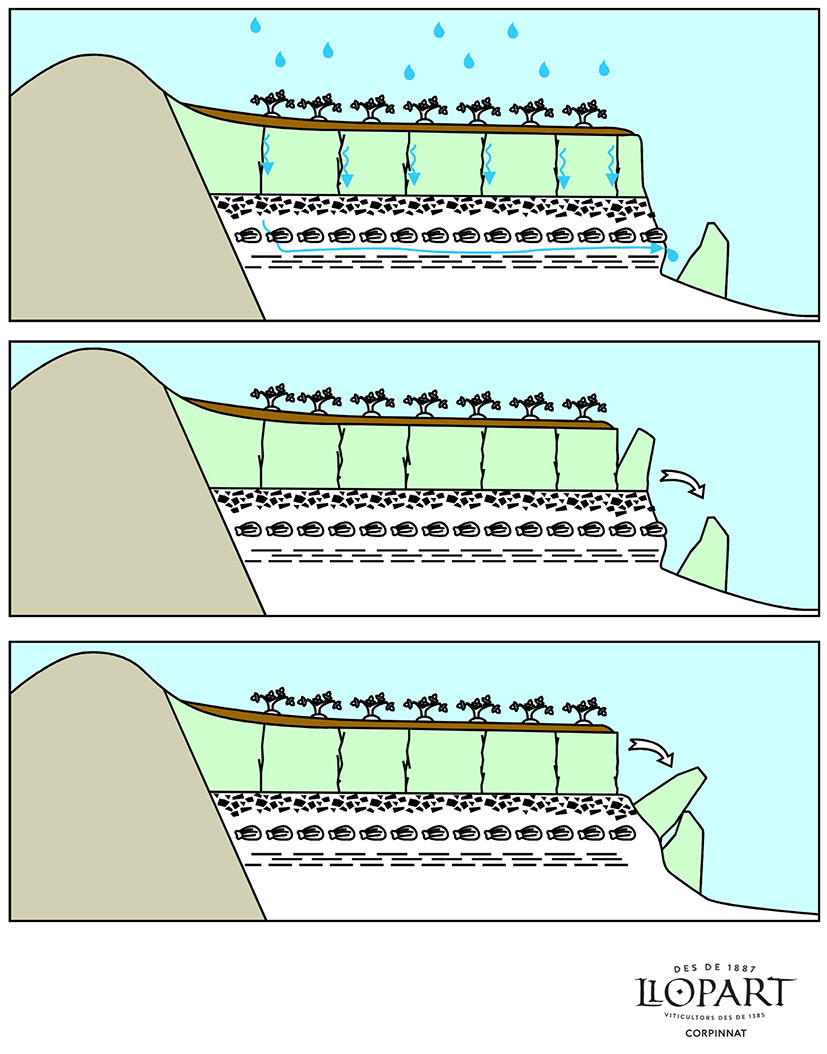
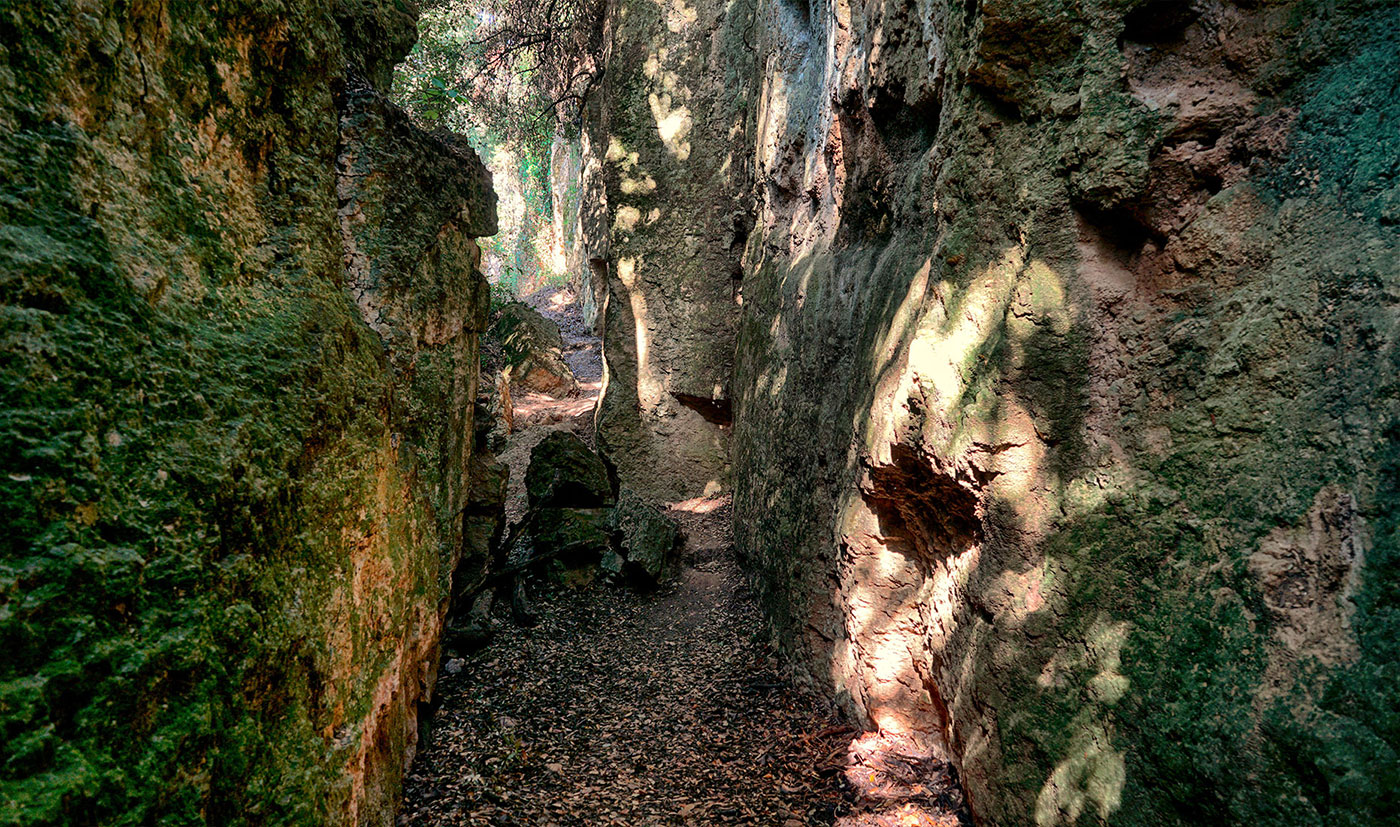
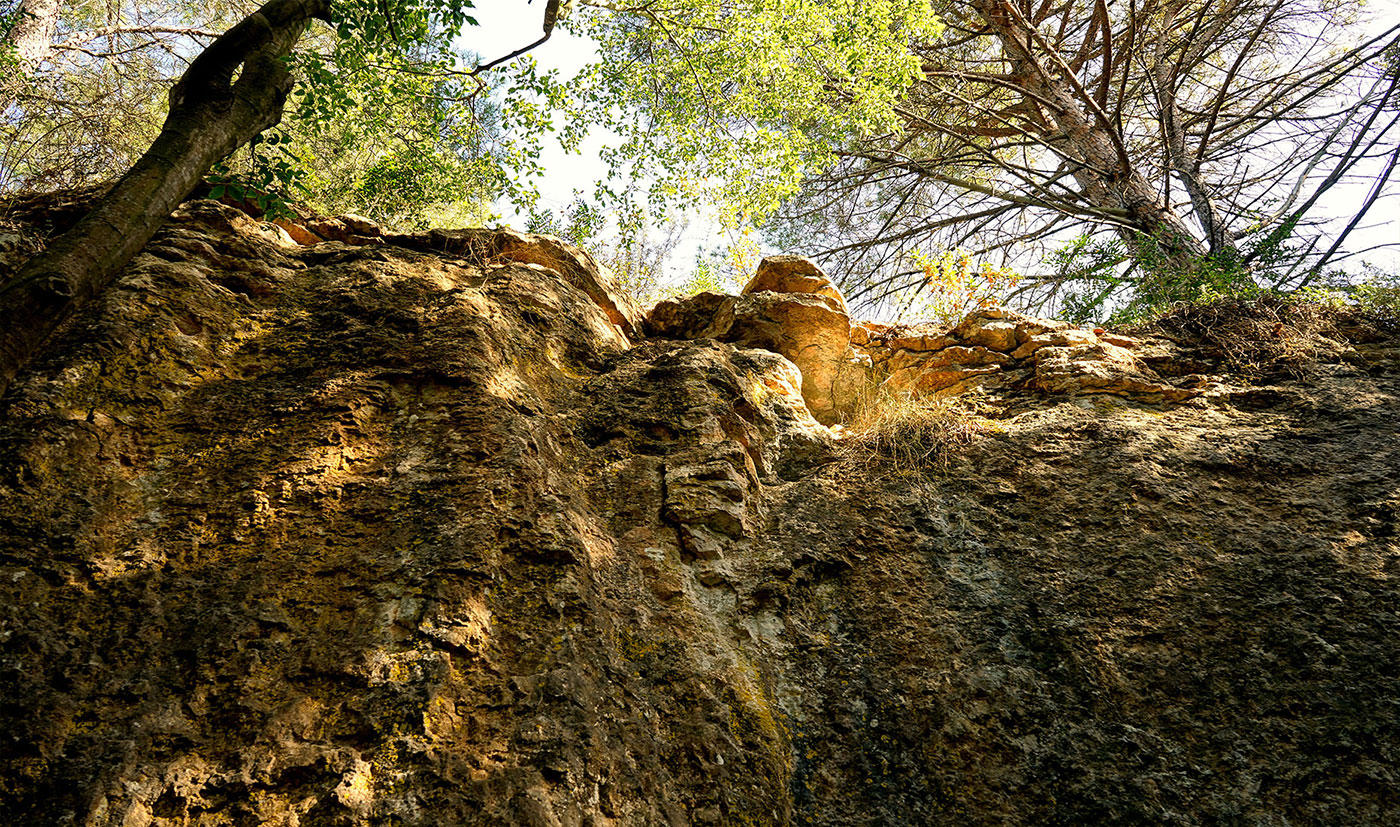
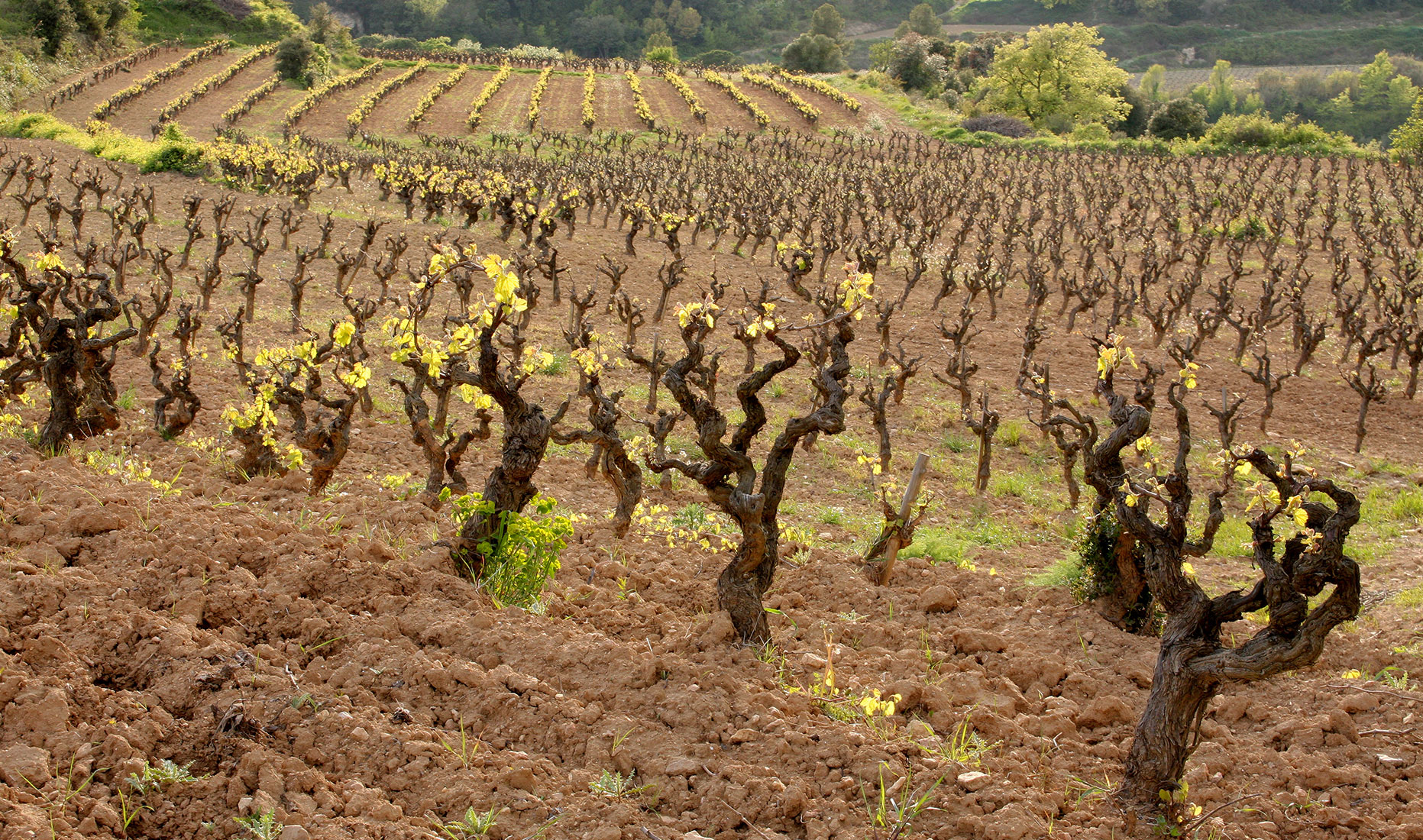
Les Flandes is a place formed by a formidable amphitheater of vineyards, raised on a large vertical wall of limestone rock, more than 12 meters high . Due to rainwater seepage, spectacular rock falls have occurred on the rocky wall that allow access and examination, in an absolutely exceptional way, of the subsoil of the vineyards located above it.
The soil is moderately deep, with a basic pH and is highly evolved. It has a medium to fine texture and a good mineral balance, with the accumulation of carbonates in the middle layers. The level of organic matter is low. Up to 65 centimeters deep, it has numerous cavities and galleries due to the high activity of the native fauna. The slope of the land in the form of slopes prevents the accumulation of rainwater, forcing the vine to develop strongly vertically in search of moisture, taking advantage of the cracks found in the limestone rock. This allows the vines to maintain stable production and quality, even in years of extreme drought.
The vineyards face north, in the shade, with a nuanced solar insolation. The height with respect to the surrounding terrain and the easy entry of cooler air from the north, give rise, during the hottest periods, to a high thermal contrast at night , a factor that favors a slow ripening of the grapes. These special conditions give us an optimal aromatic expression, a complete phenolic development and the achievement of good levels of sugars, while maintaining, at the same time, high acidities that are essential for the long aging in bottle that the wines will achieve. The Llebeig wind, a southwesterly wind coming from the coast, arrives during summer afternoons, as a marinade air loaded with humidity. This humid air has 2 benefits for the vineyards: as a water supply on the hottest and driest days due to the phenomenon of nocturnal condensation and as a moderator of the temperatures of the environment due to morning evaporation.
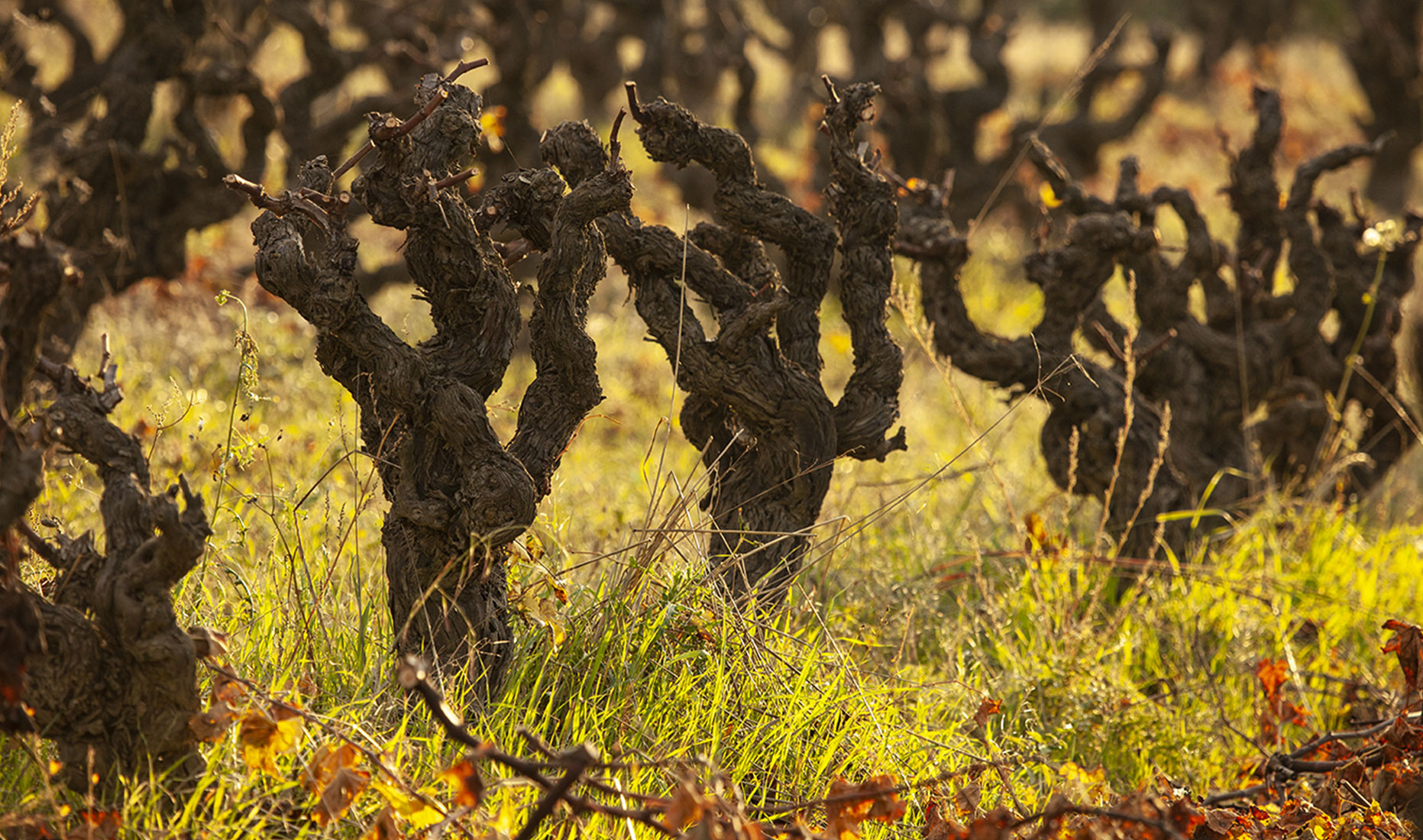
As in the rest of the Heretat, all the vineyards are surrounded by wild areas and Mediterranean forest. The great biodiversity that exists provides natural protection to the vines against plant diseases, allowing us to cultivate naturally, with healthy and resistant plants. The cultivation is carried out following the strictest organic and ecological criteria, as in the rest of the 95 hectares of vineyards of the Heretat can Llopart de Subirats. The vineyards of Les Flandes were planted in the decades from 1940 to 1960. They have an approximate production of about 4,000 kg/ha. (less than 1.5 kg per vine).
Ticu vineyard (planted in 1935), Montònega variety. It is the phenotypic adaptation of the Parellada variety to mountain terrain. It is the most delicate grape, requiring careful green pruning and vegetative management. In Flanders, due to its peculiar conditions, it is possible to obtain wines with great aging potential and exceptional finesse.
Pere de can Ros vineyard (Xarel·lo planted in 1934 – Macabeu planted in 1956). It is the vineyard with the lowest production, and provides grapes with high levels of sugar and acidity. It brings mineral profiles and an unusual salinity to the wine. It is the structure of the blend.
Isidoro vineyard (planted in 1981), Xarel·lo variety. It produces subtle and elegant aromas, a persistent taste balance and a very stable aging. It is mainly responsible for the complex range of sensitive nuances of the Original sparkling wine.